
The first step in treating EPI is obtaining a cTLI blood panel test to ascertain EPI.
This test is not part of a routine blood panel and must be specifically requested. The results will help you tailor your treatment plan.
- In addition to cTLI, it is ideal to run serum cobalamin (B12) and folate tests.
New Reference Levels for diagnosing released in 2024
TLI testing and EPI levels have just been revised in 2024:
Trypsin-Like Immunoreactivity (TLI) reference levels for diagnosing Exocrine Pancreatic Insufficiency (EPI) in dogs and cats, as released by Texas A&M University, College of Veterinary Medicine & Biomedical Sciences in 2024.
The recently revised TLI levels are as follows:
Dogs: A TLI level of 10.9 ug/L or lower is now considered diagnostic for EPI.
These adjustments reflect advancements in the understanding and diagnosing EPI and aim to provide greater accuracy in identifying this condition.
With this test, the lower the number, the more likely your dog has EPI.
(These photos are of old TLI levels – but gives an indication of what they look like)
Always ask for B12 and Folate to be tested too.
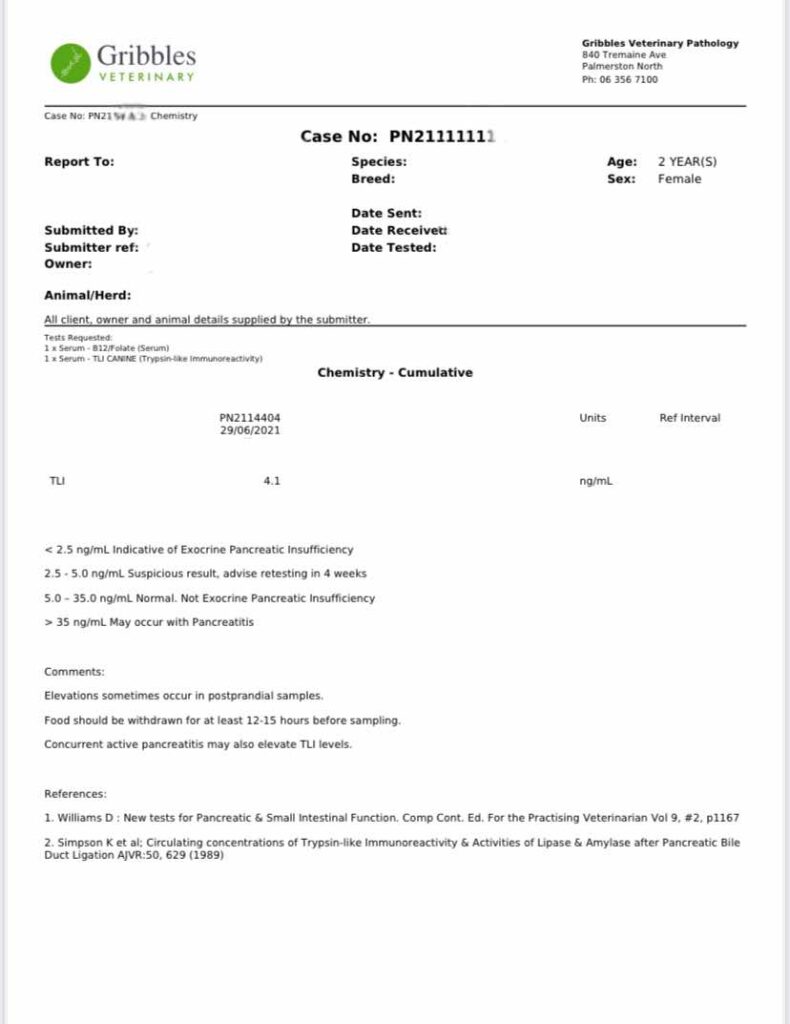
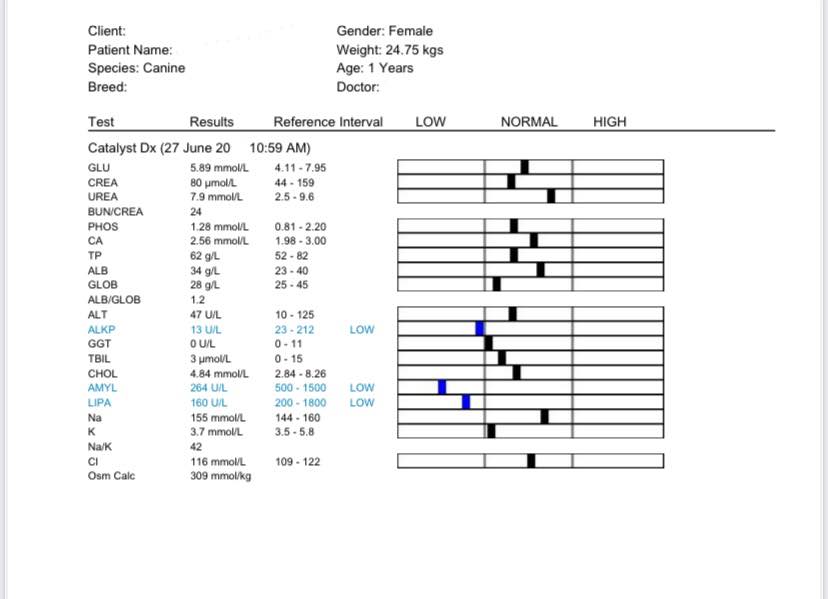
Stool sampling to test for EPI.
A stool sample can be used to help diagnose Exocrine Pancreatic Insufficiency (EPI) in dogs, but it’s not the only diagnostic tool.
While a stool sample can be useful, it’s often used in conjunction with blood tests to get a more complete picture of the dog’s pancreatic function.
Here’s why and how stool samples are used:
* Faecal Elastase Test: This test measures the level of elastase, an enzyme produced by the pancreas, in the stool. Low levels of faecal elastase are consistent with EPI.
* Faecal Protease Test: Another test involves assessing the protein-digesting enzymes in the stool. Three consecutive samples may be needed to account for variations in enzyme activity throughout the day.
* Limitations: While faecal elastase testing is helpful, it’s not always definitive.
Normal dogs can sometimes have low faecal elastase levels, and the test isn’t widely available.
Other Diagnostic Tools:
* Canine Trypsin-like Immunoreactivity (cTLI): This is the preferred blood test for diagnosing EPI. It measures the level of trypsinogen, a precursor to the enzyme trypsin, in the blood. A fasted blood sample is required for this test.
* Vitamin B12 and Folate Levels: These tests are often done alongside cTLI to provide a more comprehensive assessment of pancreatic function.
In summary: Stool samples, particularly for faecal elastase and protease testing, can be valuable in diagnosing EPI, but they are often used in conjunction with blood tests like cTLI for a more accurate diagnosis.